
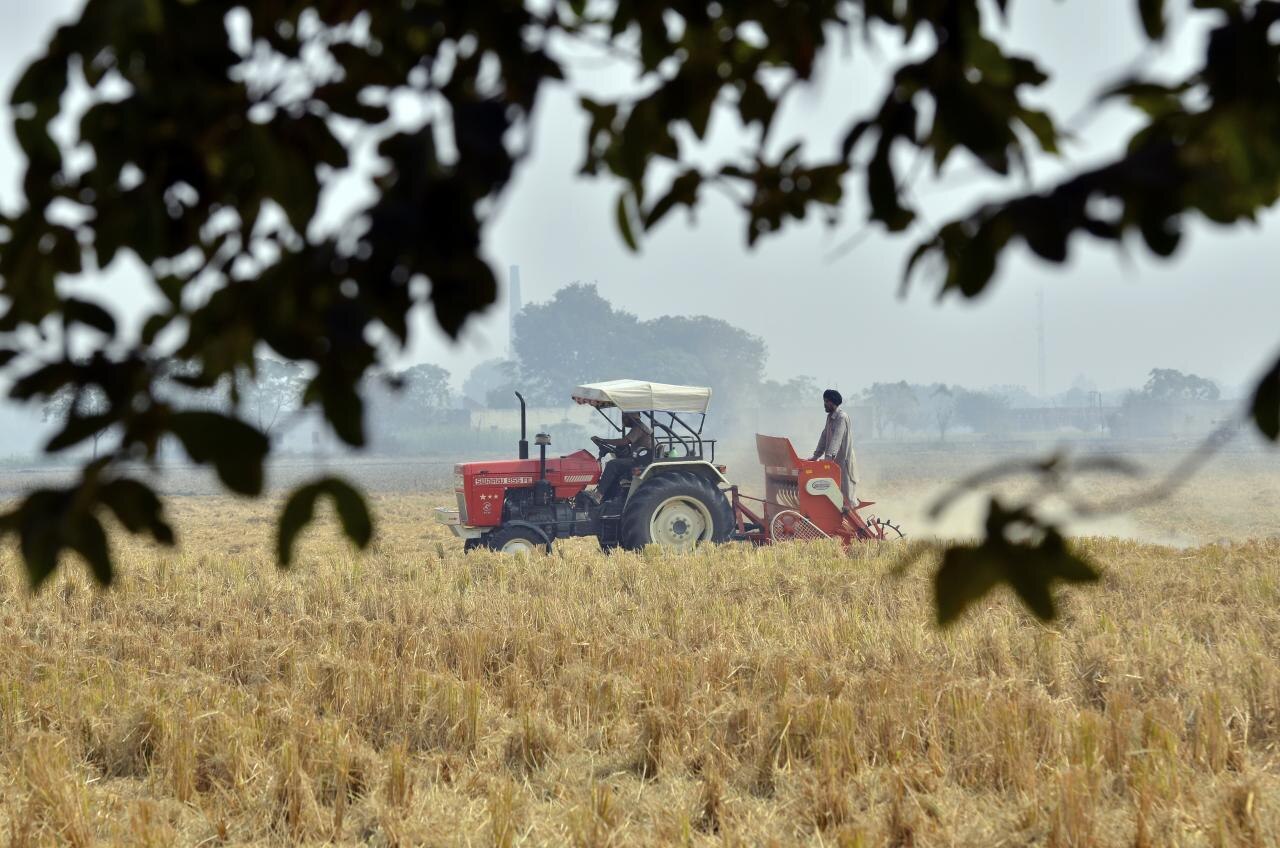
As regional journalists for My Healthy Punjab, our commitment has always been to prioritize health, environment, and social justice. This year, much like in previous years, the agricultural sector of Punjab faced a massive pollution crisis—stubble burning. This is not merely an agrarian issue; it is a looming threat to our living environment and public health. In this analysis, we delve deep into everything from the Central Government's latest stringent policies to the ground-level impacts.
Background and Core Causes of the Crisis
Punjab, often called the 'Granary of India,' is the perennial source of livelihood for its farmers. While agriculture defines our identity, it also brings with it a severe environmental conflict—crop residue burning. Traditionally, burning the stubble left in the fields after paddy harvesting was a common practice. This method offered farmers both labor savings and an apparent way to clear land quickly for the next crop.
This practice of stubble burning poses a significant concern for environmental scientists and monsoon regulators every year. The resulting emission of carbon dioxide, nitrogen oxides, and suspended particulate matter (PM) levels in the air become dangerously high for life. In this context, it is crucial to note that the Central Government has adopted a very strict stance on stubble burning, creating significant administrative and legal pressure at the state level.
Ground Reality and Key Issues
According to our investigations, the issue of stubble burning is a classic 'Policy Dilemma.' On one side are farmers whose livelihoods depend on traditional methods. On the other, assuming that environmental damage can be ignored is flawed, as it drastically degrades air quality. Agricultural experts have repeatedly suggested that instead of burning the residue, it should either be mechanically incorporated into the fields or processed for organic use.
To manage this situation, the Central Government is exerting both legal and economic pressure. This implies that no farmer or agricultural activity can be overlooked, leading to heightened monitoring and legal readiness across Punjab's districts. This represents a major administrative shift demanding changes in farming practices.
Impact on Punjab's Districts and General Public
This crisis is not confined just to the fields; it affects every citizen of Punjab. When stubble is burned, its impact—in the form of greenhouse gases and PM 2.5—reaches urban areas. Consequently, questions arise not only about farmers' income but also about the health of our children and property.
For urban residents, where air pollution risk is escalating, cases of respiratory illnesses are rising. Furthermore, this issue impacts Punjab’s economy because a clean and regulated agricultural system is vital for long-term development. Tensions within the farming community regarding this matter are increasing, as they require proper alternatives and economic support to adopt new methods.
Government Statements and Administrative Action
As mentioned earlier, the Central Government has adopted a firm stance on this issue. This means that state governments can no longer implement weak policies. At the administrative level, the current situation involves increased monitoring of fields and readiness for strict legal action. The objective is to prevent farmers from engaging in unnecessary polluting activities.
However, beyond mere surveillance, there is a growing demand for the government to introduce viable alternative packages. To make any action successful, merely preparing penalties is insufficient; it is equally vital to initiate income-generating models that provide value to the stubble. This must be a multi-pronged attack—one where the law is strict, but alternatives are also attractive.
Expert Opinion and Future Analysis
Environmental experts view this situation as a 'Systemic Failure.' According to them, the biggest challenge lies in balancing the farmers' ground reality, the economic pressure of agriculture, and regulatory restrictions. Experts emphasize that rather than immediate cash relief, a long-term strategy must be adopted, incorporating large-scale projects for utilizing stubble as biofuel or feed.
For future policy, both the Ministry of Agriculture and the Environment Department must collaborate on a joint model that assures farmers that adhering to regulations will not result in any economic loss. Government pressure alone is insufficient; it requires a package of financial and technical support.
Key Takeaways for Citizens & Q&A
Every concerned citizen affected by this crisis must understand that environmental protection is our shared responsibility. While the Central Government's stance needs to be firm, farmers cannot be treated ruthlessly. It is important for citizens to know what steps to take during such pollution levels.
Question: How can I protect my family from this air pollution? Answer: Use HEPA filter air purifiers at home, increase the use of public transport, and stay updated on government health alerts.
Question: What should farmers do? Answer: If immediate solutions are not available, gather information from local government portals regarding alternative options (like composting stubble) and present it collectively to the government.
In conclusion, this is not just an agricultural issue; it is a major policy and environmental crisis touching every aspect of our lives. While the Central Government's strict approach is in the right direction, ensuring the livelihood of the farmers in every step taken must remain the true mandate for 'Healthy Punjab.'

💬 ਪਾਠਕਾਂ ਦੀਆਂ ਟਿੱਪਣੀਆਂ / Reader Comments 0
ਆਪਣੇ ਵਿਚਾਰ ਸਾਂਝੇ ਕਰੋ। ਕੋਈ ਲੌਗਿਨ ਜ਼ਰੂਰੀ ਨਹੀਂ!
ਸਭ ਤੋਂ ਪਹਿਲਾਂ ਆਪਣੀ ਰਾਇ ਦਰਜ ਕਰੋ!
ਬੀ ਰਹਿਓ ਪਹਿਲੇ ਟਿੱਪਣੀਕਾਰ (Be the first to share your thoughts).