
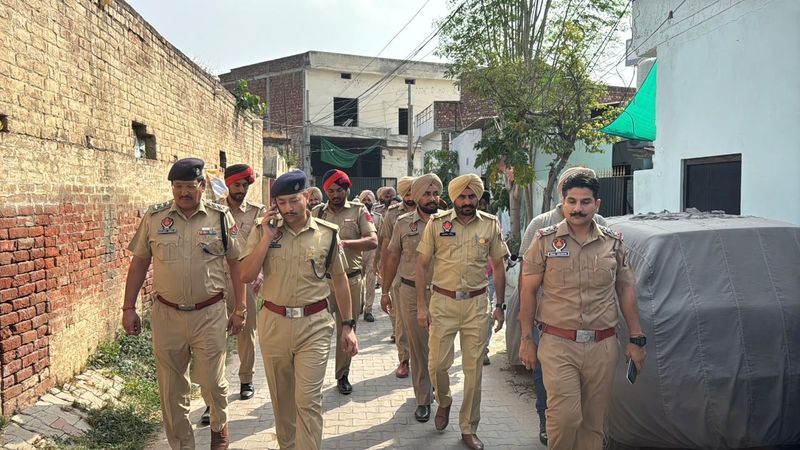
Tackling the Drug Trade in Patiala: Police Conduct Massive Operation Across 19 'Hotspots'
My Healthy Punjab, continuously investigating critical issues of health and social security, provides an in-depth look at a massive and comprehensive campaign launched by the police in Patiala district. This is not merely a routine arrest; it is part of a meticulously planned operation executed by law enforcement officials. Our sources and on-ground observations make it clear that this action represents a significant effort to curb the escalating drug influx across Punjab.
Background and Core Issues
Punjab, once a center of prosperous agriculture and culture, is currently grappling with the severe impact of the narcotics trade. This crisis is not just a criminal issue; it is a deep social ailment eroding the economic and mental foundations of families. Urban centers like Patiala serve as major hubs for this drug network, where traffickers establish 'hotspots' to conduct their activities away from public view.
Against this backdrop, the police department has taken the narcotics menace with utmost seriousness. Consequently, they did not opt for a general or conventional operation but adopted a 'strategic' approach. Selecting 19 specific areas implies that these zones were considered active centers of drug trafficking—where drugs were traded either across borders or within city markets. The primary objective of this drive is to dismantle the traffickers' network and restore a sense of security among local residents.
Ground Reality and Key Details
According to available facts, the police did not conduct an operation in just one area; rather, they organized a unified and coordinated search drive across 19 designated 'hotspots' in Patiala. This was not a daily patrol but part of an extensive investigation involving significant deployment of forces. This clearly indicates that the authorities aimed to reach the very roots of the drug trade, not just apprehend street-level dealers.
When an area is labeled a 'hotspot,' it signifies that activities related to drugs are already intensifying there. This operation suggests that the police selected these 19 zones based on rigorous Data Analysis and intelligence reports. This leaves no avenue for drug traffickers to rely on any single village or locality to hide their operations. It is a multi-faceted and locally informed step.
Impact on Punjab's Districts and Citizens
The impact of drugs is not confined to cities like Patiala; it directly affects agriculture, the youth workforce, and the economy. When drug trade flourishes, it ceases to be merely an issue of income; it threatens the entire socio-economic structure. Farmers' land, which is the backbone of Punjab, can fall into debt due to narcotics, and the youth who should be working become victims of this web.
Such a large-scale police drive sends a direct message to the public that the government and police will not condone such illegal businesses. Ordinary citizens feel secure knowing that the activities of traffickers in their locality are under surveillance. This action also motivates the local community to unite, creating an environment of mutual vigilance.
Government Statements and Administrative Action
Whenever a major police operation occurs, firm and calculated statements from the government level are necessary. Although this specific report does not detail any direct statements from ministers or senior officials, the action itself constitutes a strong administrative confirmation. It shows that the local police department is receiving full cooperation and directives from the district administration.
Such an operation implies a 'systematic' effort to completely eliminate the illegal financial flow associated with drugs. Simply making arrests is not enough; the main goal is to identify the connected network and dismantle their supreme operations. This is a signal that authorities view drugs not merely as linked to poverty or recreation, but as a massive economic web that must be broken.
Expert Opinion and Future Analysis
The drug crisis cannot be solved by 'just police action.' Therefore, analysis from local social governance experts and health specialists is necessary to gauge how effective this campaign can be. Experts suggest that if drug prevention is viewed only through a legal lens, it will only be a temporary fix (a Band-Aid solution). Thus, the government must focus on rehabilitation and treatment.
Future analysis suggests that these 19 'hotspots' are not just centers for selling drugs; they could also harbor other forms of illegal activities. Therefore, the police need to conduct further investigative actions, such as tracing financial transactions, to ascertain if any larger illicit network is involved with the drug trade. Overall, it is a successful beginning, but its final destination can only be reached through collective and policy-level efforts.
Key Takeaways for Citizens & Q&A
After such a major operation, what should ordinary citizens do? My Healthy Punjab provides you with some actionable points. First, any information regarding suspicious activities or individuals must be immediately provided to the local police. This basic intelligence forms the foundation for larger actions.
❓ Question: Should we be afraid of talking to our neighbors?
💡 Answer: No. The police and local authorities have signaled through this operation that they are working with the people. Drug trade does not run on anger or fear; it runs on continuous activity and a web of money.
❓ Question: What help can families struggling with addiction receive?
💡 Answer: Alongside police action, the government must emphasize services from De-addiction Centres. This campaign should not be limited to arrests but must also provide avenues for employment and treatment.
In summary, this major operation in Patiala is an essential security message—drugs are not an option; they are a life-destroying plague. Citizens must remain vigilant and cooperate with the authorities' efforts so that the dream of 'My Healthy Punjab' can be realized.

💬 ਪਾਠਕਾਂ ਦੀਆਂ ਟਿੱਪਣੀਆਂ / Reader Comments 0
ਆਪਣੇ ਵਿਚਾਰ ਸਾਂਝੇ ਕਰੋ। ਕੋਈ ਲੌਗਿਨ ਜ਼ਰੂਰੀ ਨਹੀਂ!
ਸਭ ਤੋਂ ਪਹਿਲਾਂ ਆਪਣੀ ਰਾਇ ਦਰਜ ਕਰੋ!
ਬੀ ਰਹਿਓ ਪਹਿਲੇ ਟਿੱਪਣੀਕਾਰ (Be the first to share your thoughts).