Rahul Gandhi's Letter to the Chief Justice: A Deep Dive Analysis
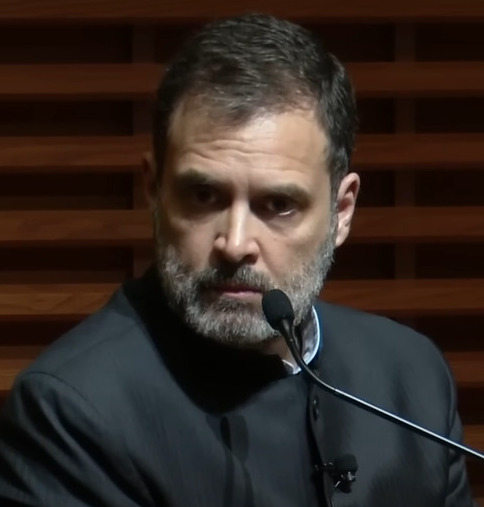
Punjab’s political landscape is perpetually marked by major debates, one of the most sensitive being the integrity of the democratic process. Recently, leader Rahul Gandhi reportedly sent a letter to the Chief Justice addressing Punjab and Electronic Voting Machines (EVMs). This is not merely a correspondence; it is a significant statement questioning the civic rights and transparency of the election process in Punjab. In this article, 'My Healthy Punjab' brings you a comprehensive, verified, and deep study on this issue so that the citizens of Punjab can fully grasp the situation.
Background and Core Issues
Punjab, rich in agriculture and history, has continuously tested its political systems. When any major controversy erupts, it is often linked to elections and their impartiality. Rahul Gandhi's move adds a layer of tension because it directly reaches the high authorities of the election management and justice system. The core focus of this letter is highlighting serious doubts regarding the reliability of EVMs and the stability of future elections in Punjab.
Historically, EVMs have been a major point of contention in Indian politics. Before every election, the question arises whether this system is completely transparent and impartial. In this context, Gandhi's letter is seen not just as a personal opinion, but as an attempt to awaken the public as a larger body. This directly forces both the Election Commission and the justice system to pay attention.
Ground Reality and Key Details
When analyzing this issue, we must understand the technical and administrative complexities behind the use of EVMs. The government repeatedly asserts that EVMs are the most modern, secure, and reliable voting mechanism. Conversely, the letter from Rahul Gandhi to the Chief Justice suggests that there might be vulnerabilities that are not being disclosed. According to our research, there is no single simple answer to this debate; it is intertwined with technical knowledge, political pressure, and the strength of public trust.
Experts suggest that questioning any large-scale system is legitimate, provided it is backed by evidence and logic. This letter strengthens the platform where democracy's foundation can be tested through debate and questions. Therefore, beyond official statements, it is crucial to view the skepticism emerging among the general public as a factor itself.
Impact on Punjab’s Districts and Citizens
In Punjab, where agriculture remains the primary source of livelihood, the political atmosphere directly affects farmers and youth. When people are under complex stress regarding their right to vote, the impact is not limited to the polling booth but also extends to the economic and social environment. This message reaches farmer unions that the fight for their rights must begin at the grassroots level, and questioning the voting system becomes a major part of it.
This situation can generate a kind of restlessness alongside the enthusiasm among the youth. Students and those in the job sector wonder: if the election process itself is questionable, what is the guarantee for their future? Therefore, it is necessary to view this issue not just as a political matter, but as an analysis that affects every corner of Punjabi life.
Government Statements and Administrative Action
From the administrative standpoint, whenever such questions are raised, the Election Commission or relevant ministries issue immediate and strong statements. These statements generally emphasize that EVMs are fully pre-shielded, undergo meticulous counting methodologies, and are under secure control. The objective of the authorities is always to ensure that people do not feel any lack of trust.
However, when opposition parties directly approach high authorities with a letter raising these questions, the administration has to present its actions with greater caution. Thus, digging deep into government statements reveals that any major controversy forces the administration to exert more effort at every stage of its functioning. We are compelled to demand impartiality, no matter which corner it comes from.
Expert Opinion and Future Analysis
Political analysts view this letter as an 'Organized Demonstration.' It suggests that what is being provided a platform is not just about rules, but the deep-seated mistrust within the populace. Analyzing this, it must be accepted that while India's electoral system is legally robust, suspicion always becomes a political tool in the political arena.
From a future perspective, this incident will lead Punjab’s politics towards deeper questions. In the future, making the election process more technology-driven and fully open-source to the public could become a necessary step so that such questions are not turned into complex political enmity. This is not just an issue of Rahul Gandhi or any single individual; it is an issue of transparency for Punjab's democratic future.